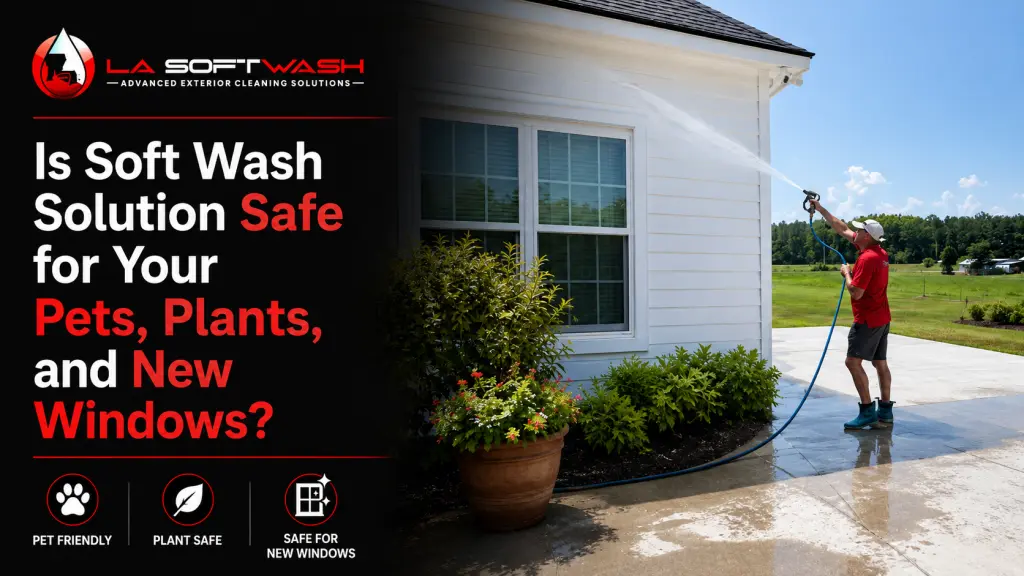
The soft wash solution we apply to Baton Rouge homes contains diluted sodium hypochlorite (the same active ingredient in pool water and household bleach) mixed with a surfactant soap. At the concentrations that reach your siding, it is safe for pets once surfaces dry, safe for plants when the crew waters landscaping before, during, and after the wash, and safe for windows when applied with a dedicated low-pressure system. The risk comes from shortcuts, not from the chemistry itself.
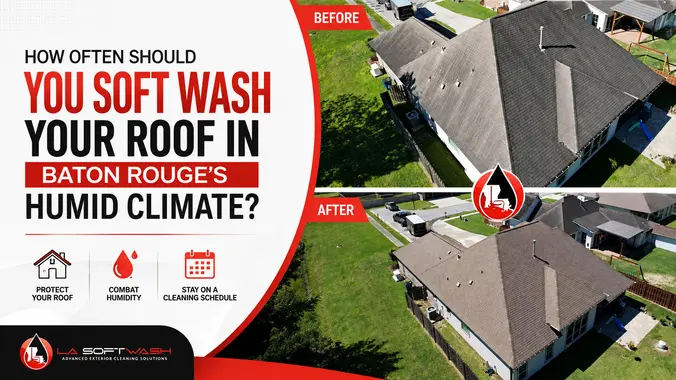
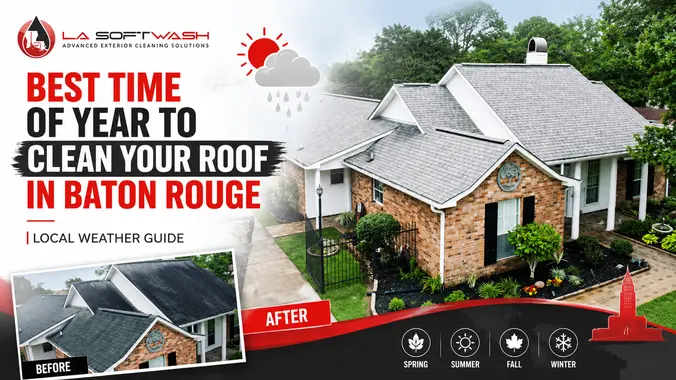
Baton Rouge averages roughly 67 inches of rain per year, and humidity here rarely drops below 70%. Most homes in this area need a soft wash at least once a year, so the safety question comes up often. Below is exactly what is in the solution and how we keep your pets, plants, and windows safe every time.
We send every customer a pre-work guideline with their work order that covers pet safety, plant watering, chemical expectations, and how to prepare the property. Most people tell us it answers their questions before our crew even pulls up.
What’s Actually in a Soft Wash Solution?
The active ingredient is sodium hypochlorite, commonly called SH in the industry. We buy it at professional-grade concentration (10% to 12.5%) and dilute it down for every job. For residential siding, the mix that reaches the wall is roughly 0.5% to 2%. The bleach bottle in your laundry room is 5.25% to 8.25%. The solution on your house is several times weaker than what you already have at home.
The second ingredient is a surfactant, an algaecide soap that lowers the surface tension of the liquid. Straight bleach runs off a vertical wall before it has time to work. The surfactant makes the mix cling to the siding, penetrate into the pores where algae and mildew root, and hold contact long enough for the sodium hypochlorite to kill the growth at the source.
This is also why pressure alone does not solve the problem. A pressure washer blasts the visible streaks off, but the root structure stays embedded in the pores. Without chemical contact and dwell time, the growth comes back within weeks.
The CDC lists sodium hypochlorite as the standard active ingredient in household bleach used for residential disinfection. The EPA has noted that hypochlorites react with organic matter and convert into sodium chloride (table salt) and water. They do not persist in the environment.
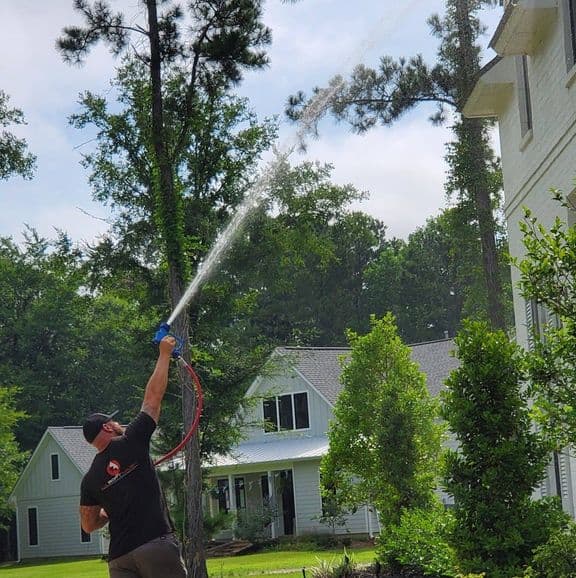
We run a commercial-grade dedicated soft wash system, not a pressure washer turned down. A lot of companies in Baton Rouge dial down a pressure washer and call it soft washing. Our system delivers a pre-mixed solution at roughly 150 to 200 PSI at the pump. By the time it exits the gun, the pressure is close to zero. This is the same system we use on every house washing job in Baton Rouge.
Applied SH Concentration by Surface vs. Common Household Products
| Product or Application | Sodium Hypochlorite Concentration |
| Soft wash on vinyl, hardy board, stucco siding | 0.5% to 2% |
| Soft wash on brick and masonry | 2% to 4% |
| Soft wash on asphalt shingle roofs | 3% to 6% |
| Household bleach (bottle) | 5.25% to 8.25% |
| Pool chlorine treatment | 10% to 12.5% |
| Municipal drinking water disinfection | 0.0002% to 0.0004% |
When Is Bleach Necessary vs. Optional?
Sodium hypochlorite is the right tool for organic growth: mold, mildew, algae, and the black streaks (Gloeocapsa magma) that show up on roofs and north-facing walls. No non-bleach cleaner matches its effectiveness against established biological growth.
Not every job requires it. Oil and grease stains on a driveway or garage floor call for a degreaser instead. Dirt and pollen buildup on a screened porch sometimes comes off with soap and water alone. We match the product to the stain. If bleach is not needed, we do not use it.
Is Soft Washing Safe for Your Pets?
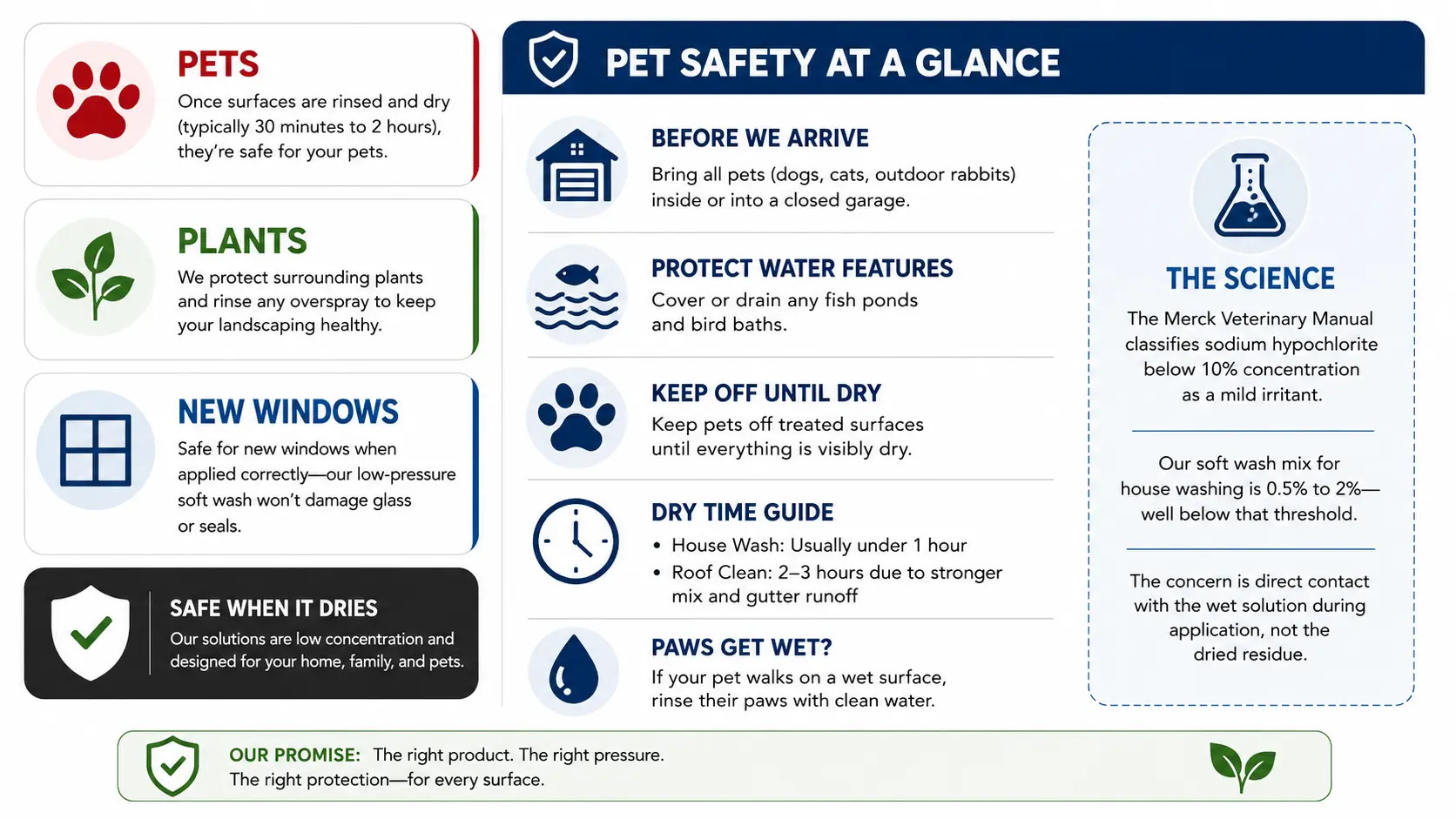
Yes. Once the treated surfaces are rinsed and dry, the area is safe for dogs, cats, and other animals. That drying window is typically 30 minutes to two hours depending on temperature and humidity.
The Merck Veterinary Manual classifies sodium hypochlorite below about 10% concentration as a mild irritant. The applied mix on your siding sits at 0.5% to 2%, well below that threshold. The concern is direct contact with the wet solution during application, not the dried residue.
Before our crew arrives, we ask homeowners to:
- Bring all pets (dogs, cats, outdoor rabbits) inside or into a closed garage.
- Cover or drain any fish ponds and bird baths.
- Keep pets off treated surfaces until everything is visibly dry.
For a standard house wash, the dry time is usually under an hour in Baton Rouge heat. Roof cleans use a stronger mix (3% to 6%) and produce more gutter runoff, so we recommend keeping pets inside for two to three hours after we finish. If your pet does walk across a still-wet surface, rinse their paws with clean water.
Will the Chemicals Hurt Your Plants and Landscaping?
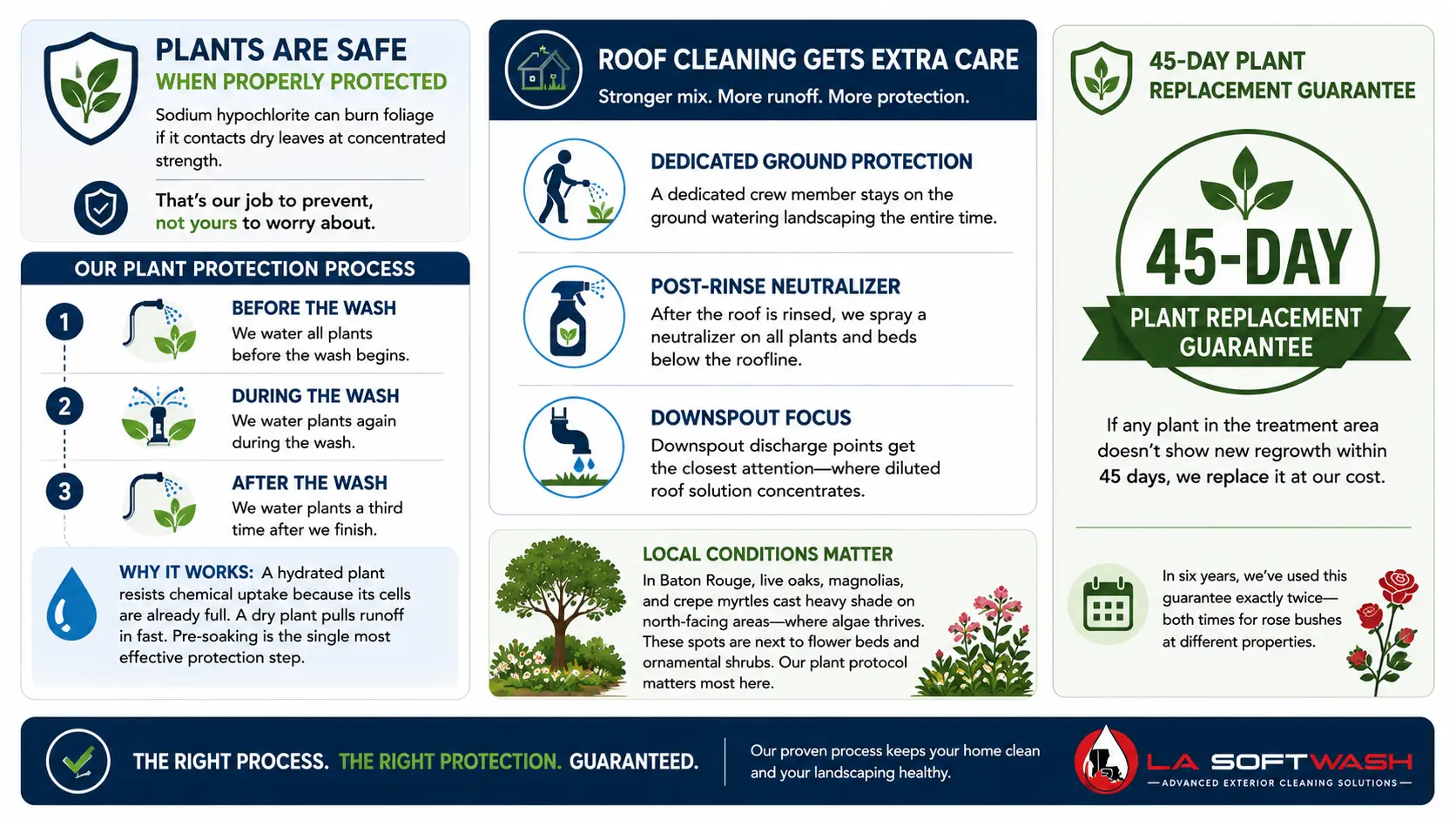
Plants are safe when the crew follows the correct protocol. Sodium hypochlorite can burn foliage if it contacts dry leaves at concentrated strength. That is our job to prevent, not yours to worry about.
Our plant protection process on every job:
- Water all plants before the wash begins.
- Water them again during the wash.
- Water them a third time after we finish.
A hydrated plant resists chemical uptake because its cells are already full. A dry plant pulls runoff in fast. Pre-soaking is the single most effective protection step.
Our roof cleaning process requires extra care because the mix is stronger and runoff volume is higher. On those jobs, we add three extra steps:
- A dedicated person stays on the ground watering landscaping the entire time.
- After the roof is rinsed, we spray a neutralizer on all plants and beds below the roofline.
- Downspout discharge points get the closest attention because that is where diluted roof solution concentrates enough to cause damage.
In Baton Rouge, live oaks, magnolias, and crepe myrtles create heavy shade on north-facing walls and roof sections. Those shaded areas grow the most algae and need the strongest treatment. They also tend to sit right next to flower beds and ornamental shrubs. The plant protocol matters most in exactly those zones.
We back all of this with a 45-day plant replacement guarantee. If any plant in the treatment area does not show new regrowth within 45 days, we replace it at our cost. In six years, we have used that guarantee exactly twice, both times for rose bushes at different properties.
Where DIYers Get Into Trouble
The chemistry is not the problem. The application is. Homeowners who try DIY pressure washing tend to make predictable mistakes that professional crews avoid.
| Step | What We Do | Common DIY Mistake |
| Pre-soak plants | Water all landscaping before any chemical touches the house | Skip this step. Plants are dry when overspray hits them. |
| Concentration | System pre-mixes at the correct ratio for each surface | Over-pour from the jug, guessing at ratios. |
| During the wash | Dedicated person watering plants, especially on roof cleans | One person doing everything. Nobody watching the landscaping. |
| After the wash | Final plant rinse plus neutralizer on beds after roof cleans | Walk away after the last rinse. No neutralizer. |
| Downspouts | Monitor runoff paths from gutters and downspouts | Forget that roof runoff concentrates at discharge points. |
| Accountability | 45-day plant replacement guarantee | No recourse if something dies. |
What About Your Windows, Especially Newer Ones?
Standard glass is not affected by diluted sodium hypochlorite at soft wash concentrations. The concern specific to newer homes is Low-E (low-emissivity) coated glass, which has a thin metallic coating that can react with undiluted bleach, ammonia-based cleaners, or high-pressure spray.
A professional soft wash does not trigger any of those risk factors. Our system delivers the same diluted mix used on siding at garden-hose pressure.
Compare that to a pressure washer turned down to “low,” which can still push 500 to 1,500 PSI at the nozzle. That level of force can blow past weatherstripping, break seals on double-pane units, and drive water into wall cavities. The equipment difference is what protects newer windows.
Our standard house wash covers everything from the shingle line to the ground, and that includes every window. For standalone window cleaning jobs, we use a water-fed pole with purified water. No chemicals touch the glass. Interior windows get a squeegee with a small amount of dish soap.
Composite Decking, Metal-Frame Doors, and Other Specialty Surfaces
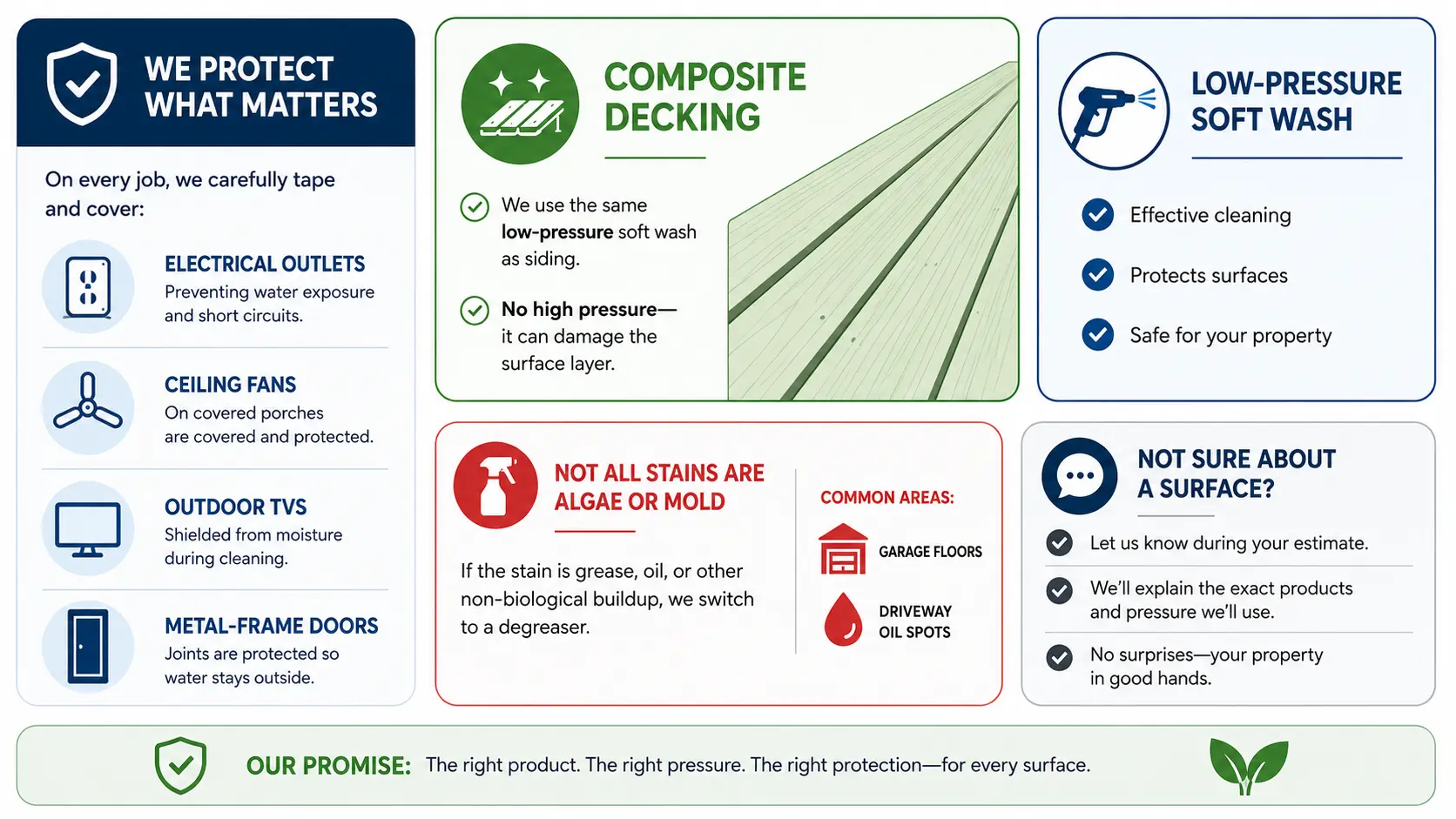
On every job, we tape and cover:
- All electrical outlets
- Ceiling fans on covered porches
- Outdoor TVs
- Joints on metal-frame doors to prevent water from getting inside
Composite decking gets the same low-pressure soft wash treatment as siding. It does not need high pressure, and high pressure can damage the surface layer on composite boards.
For surfaces where the stain is grease or oil rather than biological growth, we swap the bleach mix for a degreaser. This comes up most often on garage floors and driveway oil spots. If your property has a surface you are unsure about, mention it during the estimate. We will tell you exactly what product and pressure we plan to use before the work order goes out.
Will a Soft Wash Void Your Roof or Window Warranty?
The Asphalt Roofing Manufacturers Association recommends low-pressure, bleach-assisted cleaning as the appropriate method for asphalt shingle roofs. For windows, warranty risk comes from high-pressure washing or undiluted chemical contact, neither of which applies to our process.
If you have brand-new windows or a recently installed roof with specific manufacturer care instructions, mention it during the estimate. We will note the restrictions in the work order so the crew follows them on site.
Frequently Asked Questions
My pets spend all day in the yard. What should I do with their outdoor bowls, beds, and toys?
Pick up water bowls, food dishes, pet beds, and chew toys before the crew arrives. If you have a dog run or kennel area near the house, let us know during the estimate so we can plan our spray pattern around it. Anything fabric or porous that sits in the treatment zone should come inside for the day. You can put everything back once the surfaces around it are dry.
Does your process change for older homes versus newer construction?
The chemistry stays the same, but the prep adjusts. Older homes in Baton Rouge often have more caulking gaps, exposed wood trim, or original single-pane windows that need a gentler approach around the edges. Newer construction usually has tighter seals and Low-E glass, so we focus on keeping spray distance appropriate and noting any manufacturer guidelines. We also ask about concrete age on driveways. Anything under three years old gets a soft wash only, no pressure, to avoid surface damage.
What happens if one of my plants does get damaged?
Call or text us as soon as you notice wilting or browning in the days after the wash. We will come back to inspect the plant, photograph the damage, and determine whether it is related to the wash or a separate cause like heat stress. If the damage is from our work and the plant does not recover within 45 days, we replace it at our cost. We handle this directly with you, and you do not need to file a claim or fill out paperwork.
Get a Free Estimate
You should not have to choose between a clean house and the safety of your pets, plants, or new windows. Every job we run comes with a pre-work guideline, insurance copied onto the work order before we arrive, and a 45-day plant replacement guarantee. Call us at (225) 337-7771 or request an online estimate. We measure your property remotely, call back with a clear price, and there is no deposit.